.png)
Home Prices in 2026 What Economic Trends, Rates and Demographics May Mean

Home prices in 2026 will likely hinge on one simple question: will buyers get enough relief from mortgage rates before tight inventory pushes prices higher again?
That tension defines the market. Demand has not vanished. It has been blocked by affordability. Supply has improved in some areas, but many owners still hold low-rate mortgages and have little reason to sell.
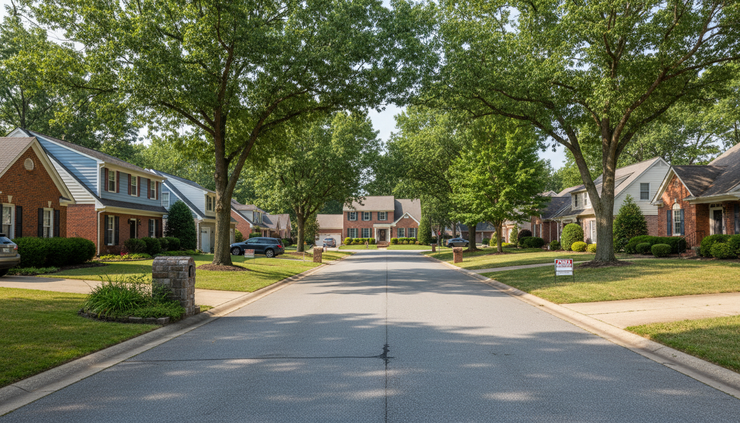
The 2026 housing market starts with affordability
Affordability is the core issue.
From 2020 through 2022, home prices rose fast in many U.S. markets. Low mortgage rates, remote work, limited supply, and strong household savings pushed buyers into the market. Then rates jumped in 2022 and 2023. A payment that once looked manageable became hard to carry.
That shift did not cause a broad national price crash. It slowed sales instead.
Many homeowners chose not to move because their current mortgage rate was far below what they could get on a new loan. That “lock-in effect” kept listings low. Low supply helped support prices, even while buyer demand weakened.
Historical context matters here:
Period | What happened | Price impact |
Mid-2000s housing boom | Loose lending and speculation pushed prices up | Prices later fell hard in many markets |
2008 to early 2010s | Foreclosures and weak demand weighed on housing | National prices declined before recovering |
2020 to 2022 | Low rates and tight supply fueled rapid gains | Prices rose quickly |
2023 to 2025 | Higher rates reduced affordability | Sales slowed, but prices held up in many areas |
The 2026 market is not a repeat of 2008. Lending standards are stronger. Homeowner equity is higher. Inventory is still limited in many metros. That lowers the risk of a broad collapse.
Interest rates may decide how much demand returns
Mortgage rates will be the swing factor.
If inflation keeps cooling and the Federal Reserve cuts rates, mortgage rates could drift lower. Even a modest drop can change buyer math. A lower monthly payment can bring sidelined buyers back.
But lower rates can also lift prices. More buyers chasing the same number of homes often means more competition.
The key risk for 2026 is simple: lower rates may improve affordability, but they may also bring back bidding pressure.
Economists at groups such as the National Association of Realtors, Fannie Mae, and the Mortgage Bankers Association often focus on this same chain reaction. Rates affect monthly payments. Monthly payments affect demand. Demand affects prices.
A likely middle path looks like this:
Mortgage rates ease, but do not return to the pandemic lows.
Buyer demand improves from weak levels.
Inventory rises slowly as more owners decide to move.
National home prices rise modestly, with wide local differences.
A sharper price gain could happen if rates fall faster than expected and supply stays tight. A flat or weaker market could happen if inflation remains sticky, rates stay high, or job growth slows.

Economic indicators will shape buyer confidence
Home prices do not move on rates alone. The broader economy matters.
Three indicators deserve close attention in 2026.
Employment
A strong job market supports housing demand. People are more willing to buy when they feel secure at work. If unemployment rises, buyers may pause. Sellers may also cut prices faster in areas where job losses hit local incomes.
Wages
Higher wages can help offset higher home prices and borrowing costs. But wage growth must outpace housing costs to improve affordability. If pay gains slow, buyers will stay cautious.
Inflation
Inflation influences the Fed, bond markets, and mortgage rates. If inflation stays above target, rates may remain higher for longer. That would limit buyer budgets and keep sales activity muted.
Consumer confidence also matters. Homebuying is a financial decision, but it is emotional too. People avoid major purchases when they expect uncertainty.
This is why forecasts for home prices in 2026 often come with a range, not a single number. A healthy economy with slightly lower rates points to price growth. A weaker economy with higher rates points to flat prices or local declines.
Demographic shifts will keep pressure on some markets
Demographics create the slow-moving current under the housing market.
Millennials are in prime homebuying years. Many still want more space, better school access, or long-term stability. Gen Z is also entering the market, though affordability has made ownership harder for younger buyers.
At the same time, many baby boomers are aging in place. Some will downsize, but many prefer to stay in their current homes. That limits turnover in established neighborhoods.
Migration patterns also matter. During the pandemic, many buyers moved toward lower-cost metros, suburbs, and smaller cities. Some of those markets saw large price gains. By 2026, the hottest pandemic-era markets may behave differently from supply-constrained coastal metros or stable Midwest cities.
Expect local gaps.
Markets with job growth, population growth, and limited construction may see continued price gains. Markets with heavy new construction, slower migration, or stretched prices may see flatter results.

Expert predictions point to a mixed market
Most mainstream housing forecasts heading into 2026 can be grouped into three paths.
Scenario | What would cause it | What prices may do |
Modest growth | Rates fall slowly and the economy avoids recession | Prices rise at a slower pace |
Flat market | Rates stay elevated and income growth cools | Prices move sideways nationally |
Local declines | Job losses or oversupply hit certain metros | Prices fall in selected markets |
Real estate economists generally do not expect a large national wave of distressed sales unless unemployment rises sharply. That is a key difference from the housing crisis era.
The stronger case is for uneven movement. A national average could show mild growth while some ZIP codes soften and others heat up.
For buyers, that means the list price matters less than local inventory, days on market, and recent comparable sales. For sellers, pricing based on 2021 or 2022 conditions could backfire. Buyers in 2026 will still care about monthly payment, repairs, insurance, and taxes.
FAQ
Will home prices go down in 2026?
Some local markets may see declines, especially where supply has grown fast or job growth weakens. A broad national drop looks less likely unless the economy turns sharply weaker.
Will lower mortgage rates make homes cheaper?
Not always. Lower rates can reduce monthly payments, but they can also bring more buyers into the market. That can push prices higher if inventory stays low.
Is 2026 expected to be better for buyers?
It may be better than the tightest years of the market if inventory rises and rates ease. Affordability will still be a challenge in many areas.
What should sellers watch before listing in 2026?
Watch local inventory, recent comparable sales, and average days on market. Pricing too high can lead to longer listing times and price cuts.

The takeaway for 2026
Home prices in 2026 will depend on the balance between rates, inventory, jobs, and demographics. The most likely path is not a boom or a crash. It is a slower, uneven market where local conditions matter more than national headlines.
A good decision starts with current neighborhood data, not broad predictions. For help reading the local market before buying or selling, contact Tammy D for real estate guidance.
This article is for general information only and is not financial advice.


Comments